Gummy stem blight is a highly destructive fungal disease affecting cucurbit crops like watermelon, muskmelon, cucumber, and pumpkin. If not controlled early, it can lead to severe yield loss, fruit rot, and poor crop quality.
If you notice leaf yellowing, stem cracking, or gum oozing, immediate action is necessary to protect your crop.
Symptoms of Gummy Stem Blight in Cucurbits
Gummy stem blight symptoms can be observed on all parts of the plant except the roots.
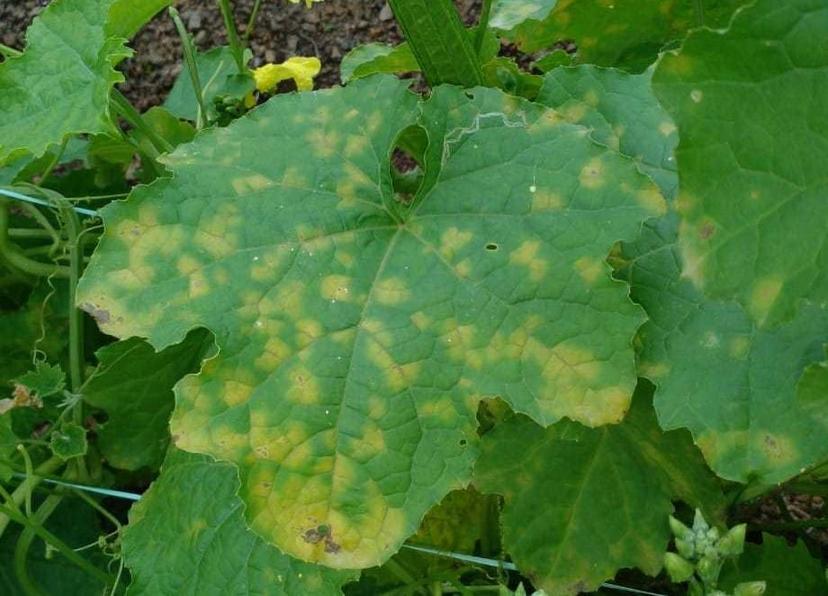
Leaf Symptoms
- Water-soaked spots near leaf margins
- Yellowing (chlorosis) around infected areas
- Spots enlarge and merge, causing leaf blight and wilting
- Brown spots on cotyledons in seedlings
Stem Symptoms
- Brown, water-soaked lesions
- Development of cankers with gummy exudation
- Stem splitting and wilting
- Seedling death in severe cases
Fruit Symptoms
- Fruit cracking and rotting
- Characteristic black rot
What causes Gummy Stem Blight in Cucurbits
Following are the conditions which create favourable conditions for the disease to develop and spread:
- High humidity levels of around 85% and moist conditions, especially with frequent rains or overhead irrigation and poor drainage.
- Infected seeds used for planting.
- Wind and rain splashes facilitating the disease’s dissemination within and between fields.
- Undecomposed plant material provides reservoir for fungus survival.
- Alternate host plants and weeds.
- Contaminated tools, equipment or even through clothing of farm workers.
Gummy Stem Blight Preventive Measures
- Use certified disease-free seeds & treat seeds before sowing
- Maintain clean nursery and remove infected seedlings
- Rotate crops every 2 years with non-host crops (Brassicas, onion, legumes)
- Deep plough the soil during summer to expose and kill the fungal spores.
- Keep the field free from weeds.
- Avoid overcrowding of plants for allowing proper penetration of air and sunlight.
- Avoid any damage to the plants as well as fruits to avoid entry of fungus through wounds.
- Collect and burn all the plant debris after harvest.
Management of Gummy Stem Blight in Cucurbits
1. Biological Management
Spray or drench with Trichoderma viride or Pseudomonas or Bacillus spp, 15 days after sowing at every 15 days interval to prevent and manage gummy stem blight disease in melons and other cucurbits.
|
Product name |
Technical content |
Dosage |
|---|---|---|
|
Pseudomonas fluorescens |
Foliar: 2.5 ml/lit of water Drenching: 10 ml/lit of water |
|
|
Trichoderma viride |
Foliar: 3 gm/lit of water Soil Application: 1 – 2 kg of the product + 100 kg of FYM |
|
|
Bacillus subtilis |
Seed treatment: 0.15 – 0.2 ml/kg seed Seedling treatment/nursery bed: 5 ml/lit Drip: 2.5 ml/lit of water |
|
|
Bacillus spp. & Pseudomonas spp |
Foliar: 5 gm/lit of water Soil Application: 2 – 5 kg of product + 120 – 150 kg of FYM |
2. Chemical Management
It is recommended to apply fungicides preventively in combination, about 1 week after germination or when the plants have 3-4 leaves to minimize crop damage and losses to a greater extent. As a curative measure, spray fungicides after disease occurrence and at appropriate developmental stages of the crop.
|
Product name |
Technical content |
Dosage |
|---|---|---|
|
Azoxystrobin 18.2% + Difenoconazole 11.4% SC |
1 ml/lit of water |
|
|
Metiram 55% + Pyraclostrobin 5% WG |
3 – 3.5 gm/lit of water |
|
|
Thiophanate Methyl 70% WP |
Foliar: 0.5 gm/lit of water or Drench: 2 – 4 gm/lit of water |
|
|
Copper Hydroxide 53.8% DF |
2 gm/lit of water |
|
|
Metalaxyl 8% + Mancozeb 64% WP |
1.5 – 2.5 gm/lit of water |
|
|
Azoxystrobin 11% + Tebuconazole 18.3% w/w SC |
1.5 ml/lit of water |
|
|
Cymoxanil 8% + Mancozeb 64% WP |
2 – 2.5 gm/lit of water |
Learn more about Gummy Stem Blight in Watermelon. CLICK HERE