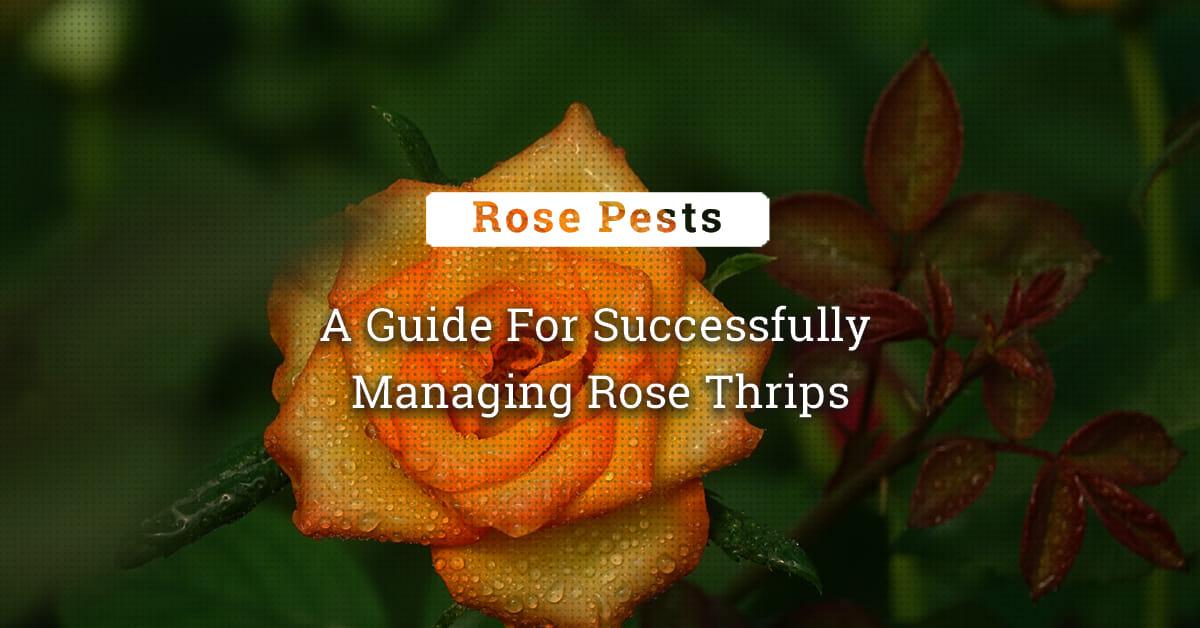
Rose Thrips are considered to be one of the most important insect pests. They are the tiny insects which feed on the sap of the rose plants which results in discoloration and stunted growth. The injury caused by thrips reduces the aesthetic value of rose blooms and makes them unmarketable. They can be identified by their narrow, elongated body and fringed wings. Hot and dry conditions favor the growth and development of thrips.
Types of Rose Thrips Infestation
Thrips are sap-sucking insects and are categorized as flower feeders, making them especially harmful in rose cultivation. They feed on leaves and flowers, causing severe thrips damage in rose plants, ultimately reducing yield and quality.
Scientific Name: Rhipiphorothrips cruentatus
Rose Thrips Symptoms
Early identification of thrips infestation symptoms is critical for effective management:
- Both nymph and adult lacerate the tissues on the underside of the leaves and flower buds.
- White color streaks can be seen on the infested leaves.
- The presence of brown patches on the leaves, along with distortion and eventual withering and dropping, is also indicative of infestation by thrips.
- Additionally, affected flowers may not fully open, and they may fade and fall prematurely.
Thrips in Roses Control Measures (IPM Approach)
An integrated pest management (IPM) for thrips approach is essential for effective control.
1. Cultural Control of Thrips
- Remove and dispose of any damaged leaves, twigs and flower buds along with the pests to prevent further infestation and damage.
- Avoid excessive nitrogen fertilizers, as this can lead to succulent growth which encourages thrips population.
- Maintaining healthy plant growth, providing proper irrigation and adequate nutrients can also help to reduce the impact of thrips on rose crops.
2. Mechanical Control
- Collection and destruction of infested plant parts is an effective way to control rose thrips.
- Regular pruning also helps to reduce thrips population and prevent further damage to crops.
- Tapas Yellow Sticky Trap can be used to control thrips in rose field. Install 4-6 traps per acre for effective management.
3. Biological Control of Thrips
- Release beneficial insects like green lacewings, predatory mites and parasitic wasps to control thrips populations in rose field.
- Ecotin Insecticide is a neem based biological insecticide containing azadirachtin which is effective against rose thrips. The recommended dosage is 0.4 – 0.7 ml per liter of water. In order to effectively control thrips, spray the mixture regularly at 7-10 days intervals.
- Kaybee Thrips Raze Insecticide contains natural plant extracts which when sprayed affects the internal nervous system of thrips, leading to paralysis and death. The recommended dosage is 1-2ml per liter of water.
- Amruth Almax Liquid is a biological insecticide containing naturally occurring entomo pathogenic fungus Beauveria bassiana which comes in contact with the cuticle of the target insect and kills them. The recommended dosage is 2-3ml per liter of water.
Chemical Control of Thrips in Rose
Chemical measures, such as the application of insecticides, can be effective in controlling thrips populations in rose crops. Some of the commercially available insecticides for thrips control include,
|
Product Name |
Technical Content |
Dosage |
|---|---|---|
|
Dimethoate 30% EC |
1.5 – 2.5ml/lit of water |
|
|
Imidacloprid 17.8% SC |
0.75-1 ml/lit of water |
|
|
Thiamethoxam 25 % WG |
0.5 gm/lit of water |
|
|
Cyantraniliprole 10.26% OD |
1.7-2 ml/lit of water |
|
|
Tolfenpyrad 15% EC |
1.5-2 ml/lit of water |
|
|
Spinetoram 11.7% SC |
0.9 ml/lit of water |
|
|
Acetamiprid 20% S.P |
0.5 gm/lit of water |
|
|
Spinosad 44.03% SC |
0.3-0.4 ml/lit of water |