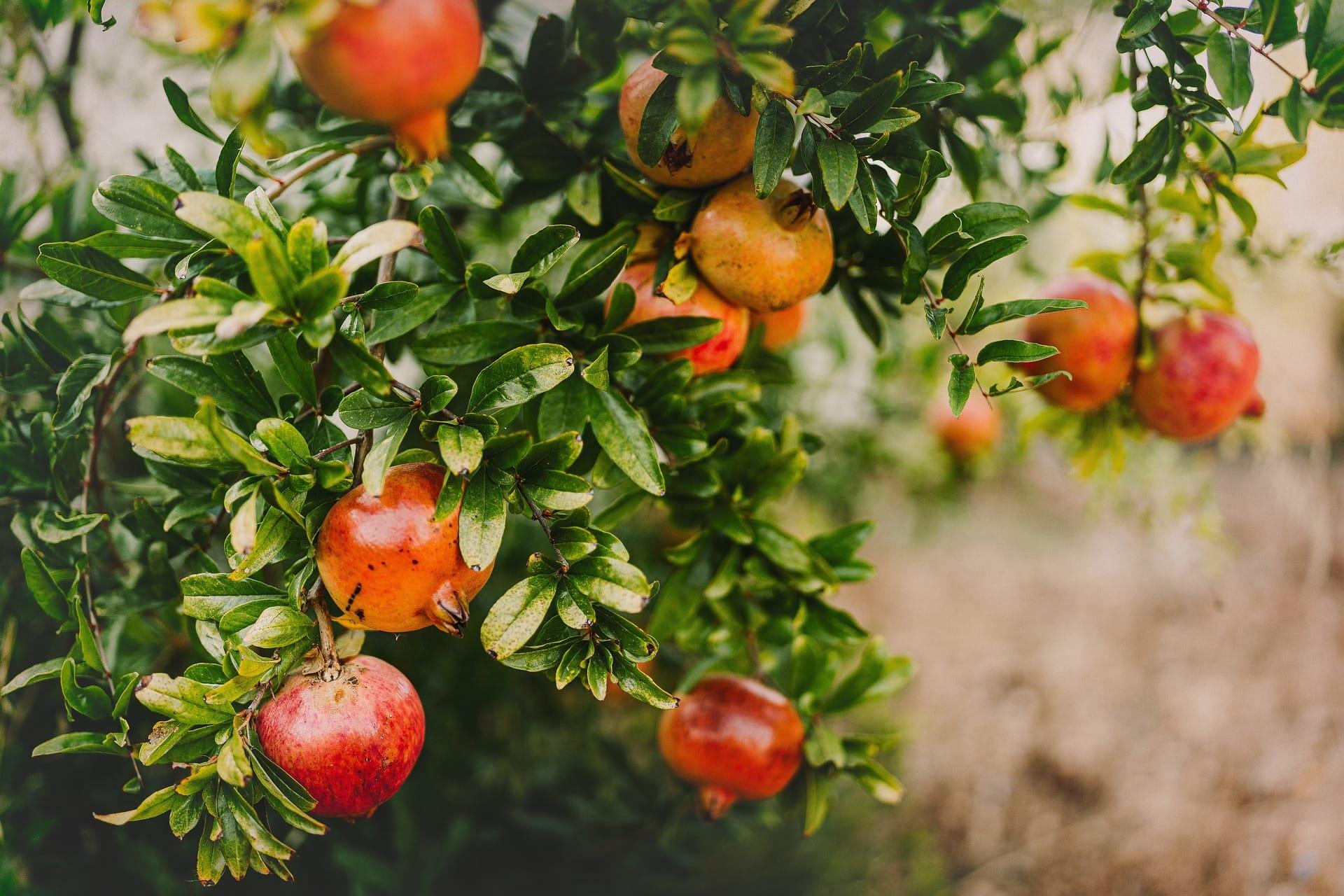
Bacterial blight in pomegranate is a serious disease that affects pomegranate cultivation in India, caused by the bacterium Xanthomonas axonopodis pv. punicae. The disease damages pomegranate trees, reduces yield by up to 90%, and lowers fruit quality. This, in turn, can affect the marketing value of the fruits and lead to significant economic losses for farmers. Thus, effective disease management strategies are crucial for controlling bacterial blight in pomegranate and maintaining productivity.
What causes Bacterial Blight Disease in Pomegranate?
Bacterial blight is more severe during the fruiting stage. The bacterium survives on infected plant debris, in soil, and in plant tissue. It is transmitted in the following ways:
- The bacterium spreads from infected plant tissues to healthy tissues through splashing rain or irrigation water.
- Natural openings and wounds can act as a source for bacterial entry.
- Contaminated equipment and the movement of workers can spread the disease over short distances.
- Infected planting material, such as seedlings or cuttings, can introduce the bacterium to new areas.
- Certain insects, such as thrips, blister beetles and whiteflies, can transmit the bacterium from infected to healthy plants while feeding.
- Environmental factors such as high humidity (> 50%) and temperature of 25 - 35°C, along with intermittent rainfall and cloudy weather, can create conditions for disease spread.
Bacterial Blight in Pomegranate Symptoms:
- Small, circular, water-soaked spots appear on the leaves, which later turn brown and necrotic. The spots may join and form larger lesions.
- In severe cases, the infected leaves may turn yellow and fall off the plant, causing defoliation.
- Infected twigs turn brown or black and may wilt, causing branch dieback.
- Small, dark, sunken spots appear on the fruit surface. These spots may enlarge, cover the whole surface and cause the fruit to crack or split open.
- The bacteria can cause the formation of gum-like exudates on the surface of infected tissues.
- Infected fruits may show internal discolouration due to rotting.
Bacterial Blight in Pomegranate: Preventive Measures
Cultural:
- Use disease-free planting material.
- Use disinfectant pruning tools and equipment.
- Remove and destroy infected plant parts.
- Avoid overhead irrigation to reduce the spread of the disease.
- Maintain proper plant spacing for better air circulation.
- After harvesting during December-February, prune infected secondary and tertiary branches.
- Apply recommended fertilizers with well-decomposed FYM and vermicompost to improve plant resistance. Applying manure and fertilizers during the rest period is also important.
Biological:
- Apply Biocontrol agents such as Pseudomonas fluorescens (10 ml/lit water) or Bacillus sp (250 ml + 10 kg FYM/Compost) and Trichoderma sp (1 - 2 kg + 100 kg FYM) as a prophylactic measure.
- Give a spray of 40% Tulsi extract, followed by neem oil spray.
- The extracts of garlic bulb, meswak stem, and patchouli leaves at a concentration of 30% can be sprayed.
- Spray Geolife Geomycin Bio Bactericide at 0.5 - 1 gm/lit water or Terra BactoKill at 3 ml/lit of water.
Chemical (Prophylactic Measure):
- To reduce the severity of the disease, apply a 1% Bordeaux mixture by spraying before pruning.
- Smear application of copper-based fungicides onto the surface of the plant parts susceptible to infection, such as the basal trunk, branches and twigs, before the onset of disease symptoms helps to control the disease.
- For this, following pruning, apply Streptocyclin or Streptomycin sulphate (0.2 gm/lit water) or Bactinash (0.5 gm/lit water) + Copper oxy chloride (2 gm/lit water) to the basal trunk of susceptible plants.
Note: Always prepare Bordeaux mixture fresh and use on the same day
Management of Bacterial Blight in Pomegranate:
For effective management of bacterial blight in pomegranate, use an integrated approach that combines preventive, biological, and chemical methods. Relying only on chemical control is not effective.
The following chemicals can be used alone or in combinations.
|
Product |
Technical content |
Dosage |
|---|---|---|
|
Copper Oxychloride 50% WP
|
2 gm/lit water |
|
|
Kasugamacyin 3% SL |
2 – 3 ml/lit water |
|
|
Combination of Nano Silver Particles & Peroxy Acid |
1.5 gm/lit water |
|
|
Streptomycin sulphate 90% + Tetracylin hydrocloride 10% SP |
0.2 gm/lit water |
|
|
Copper Hydroxide 53.8% DF |
2 gm/lit water |
Note: After bactericide application, spray General liquid micronutrient (2.5 ml/lit of water). It helps manage the disease and improves plant resistance. Also, check the product’s label to know the right time of application)
Click Here to Discover More: Effective Strategies for Managing Bacterial Leaf Blight in Rice/Paddy.
Frequently Asked Questions:
What causes bacterial blight in pomegranate?
It is caused by Xanthomonas axonopodis pv. punicae and spreads through rain splash, wounds, tools, insects, and infected planting material.
What are the early symptoms of bacterial blight in pomegranate?
Small water-soaked leaf spots, brown lesions, twig dieback, and dark sunken spots on fruits are common early symptoms.
Which weather conditions increase bacterial blight in pomegranate?
High humidity, 25–35°C temperature, cloudy weather, and intermittent rainfall increase disease spread.
How to prevent bacterial blight in pomegranate orchards?
Use disease-free plants, disinfect pruning tools, remove infected parts, avoid overhead irrigation, and maintain proper spacing.