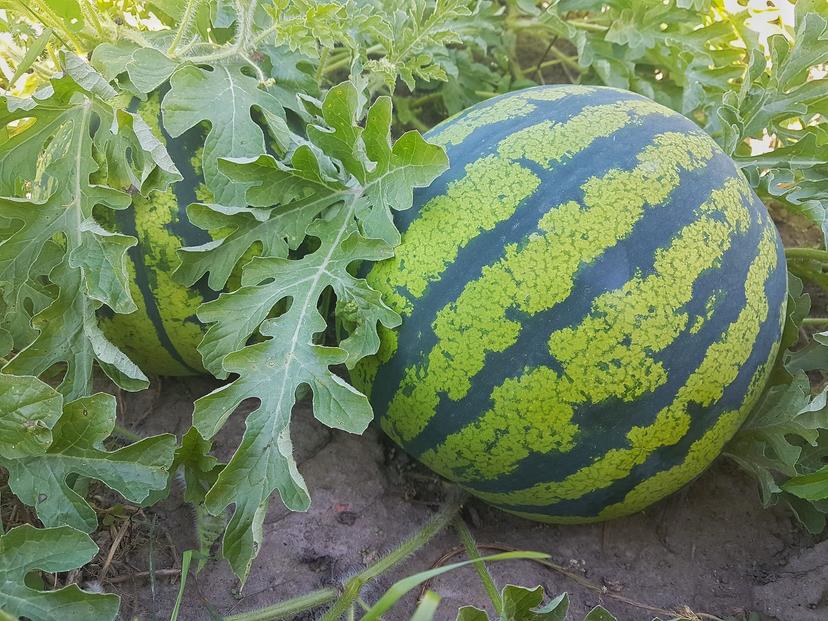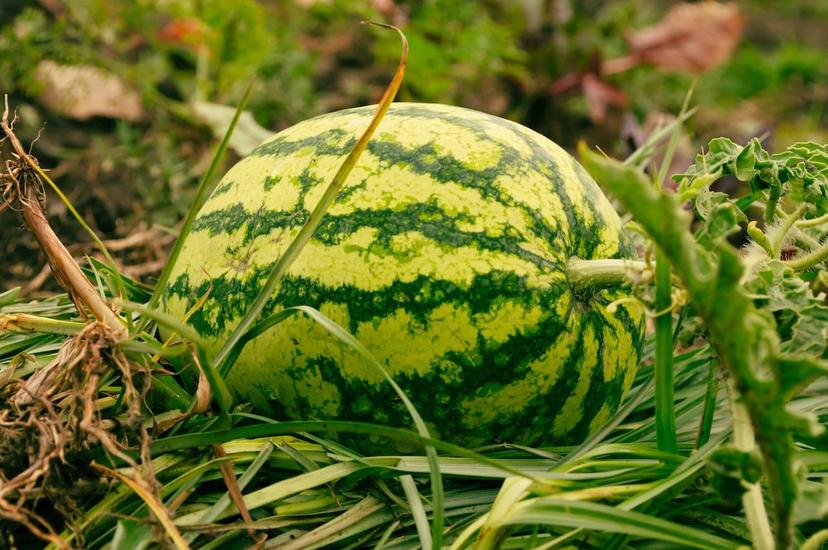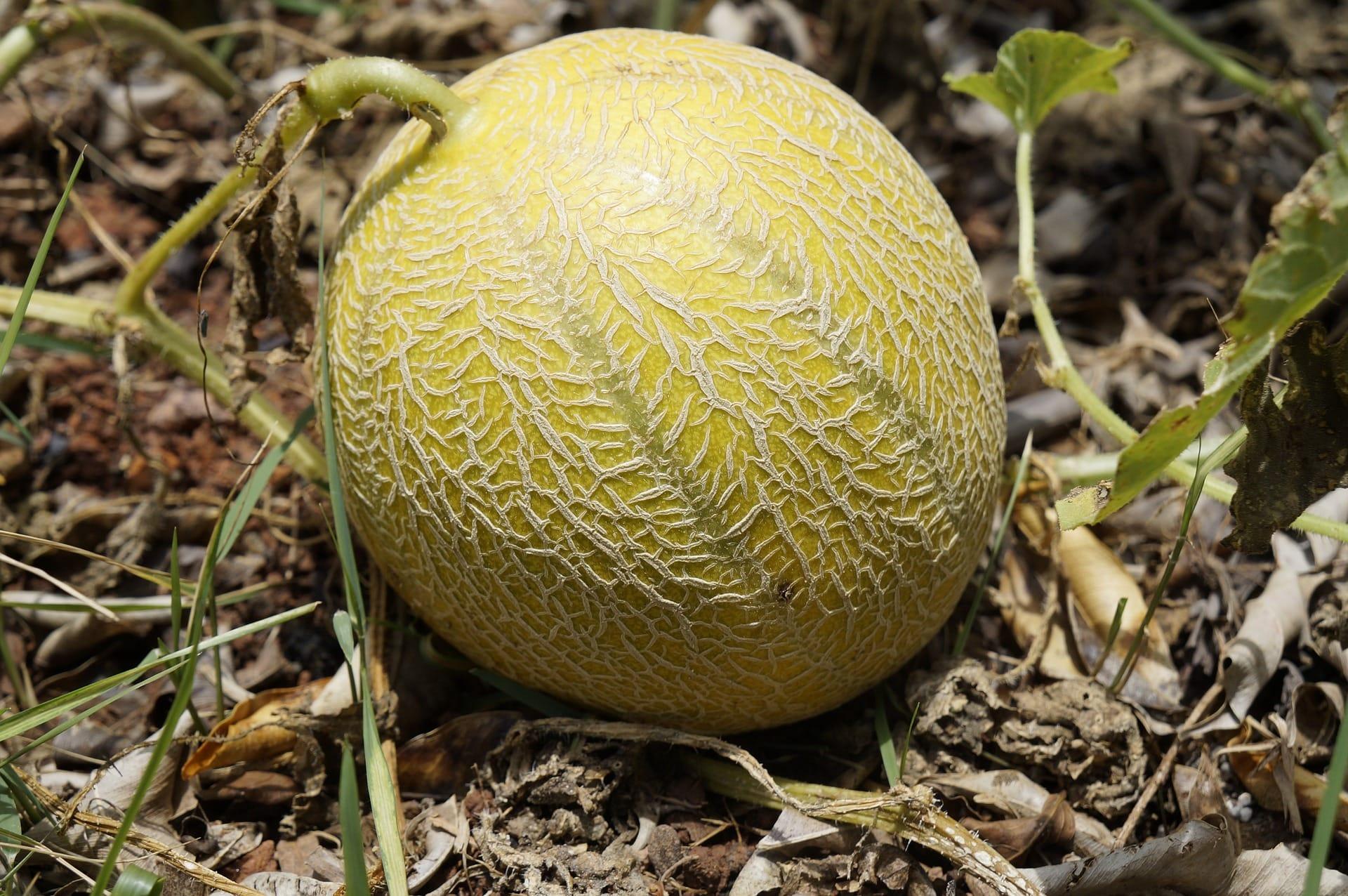
Watermelon and muskmelon crops (melons) are hosts to different insects that can cause crop loss. Melon fruit fly, scientifically known as Bactrocera cucurbitae, is a major pest affecting melon crops in India. These tiny, orange to brown coloured insects can cause significant damage to melon crops by feeding on the economic part, fruit, making them unfit for market. Fruit flies reproduce quickly and spread fast, posing a serious threat to melon production. Early detection and proper control are important to minimize the damage and prevent losses for growers.
How Do Fruit Flies Cause Damage to Melons?
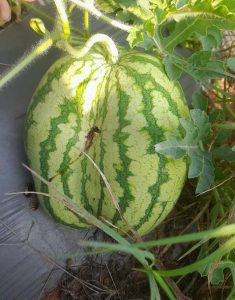
Oviposition mark on the fruit
- Female fruit flies pierce the fruit skin and lay eggs, leaving small puncture marks on the surface. These oviposition marks can lead to secondary infections by fungi and bacteria.
- Small discoloured patches appear on fruits.
- After hatching, larvae feed on the fruit flesh, leaving a mushy residue.
- Sunken, soft or mushy spots can cause the fruit to rot and become unusable.
- As the melon begins to rot due to fruit fly infestation, foul smell will be emitted.
- Presence of resinous fluid oozing out from fruits.
- Fruit fly-infected fruits are usually malformed and distorted.
Preventive Measures:
1. Cultural Practices:
- Maintain good field sanitation practices. Bury the damaged fruits deep in the soil to prevent adult fly elusion.
- Deep ploughing may help to expose the pupae.
- Crop rotation with legumes, corn or brassicas to disrupt the life cycle.
- Use trap crops such as bitter gourd and cucumber to attract fruit flies away from the melons.
- Adjust sowing time, as infestation is high during rainy season and low in hot conditions.
2. Traps:
- Use 6 - 8 Tapas fruit fly pheromone traps per acre field to monitor and control the fruit fly population.
- Yellow sticky traps will be most effective in trapping adult flies.
- Install 4 - 6 yellow sticky traps for 1 acre field.
- Citronella oil, eucalyptus oil, vinegar, and lactic acid can be used to attract fruit flies. A few drops of these attractants can be added to the trap or sticky paper to lure fruit flies.
3. Bait traps:
- Food baits (sugar-based or protein-based baits) can be used to control fruit flies in melon. Methyl eugenol can also be used in fruit fly traps to lure and kill male fruit flies.
4. Physical Barrier:
- Spray Kaolin clay on the leaves and fruits of melon plants to act as a physical barrier.
- Bagging fruits using a paper or cloth bag during the fruiting stage to avoid fruit flies laying eggs.
5. Biological:
- Introduce natural enemies such as parasitic wasps.
- Spray neem oil at 2 – 3 ml/lit water.
ITK Practices to control fruit flies:
- Smoking using rice straw and chilli powder during fruiting creates an odour that repels fruit flies.
- Neem leaves can be crushed and soaked in water, and the solution can be sprayed on the melon plants to repel fruit flies.
- Crush 20 gm of basil leaves; the extract of it, along with the crushed leaves, can be placed inside a coconut shell filled with 100 ml of water. Add 0.5 g of citric acid to increase its keeping quality. The extract is then poisoned by mixing 0.5 gm of carbofuran 3G. The traps are then suspended in the field.
Chemical Management:
|
Product name |
Technical content |
Dosage |
|---|---|---|
|
Chlorantraniliprole 18.5% SC |
0.3 ml/lit water |
|
|
Lambdacyhalothrin 5% EC |
1.5 - 1.7 ml/lit water |
|
|
Deltamethrin 2.8 EC |
1.5 - 2 ml/lit water |
|
|
Profenofos 40% + Cypermethrin 4% EC |
2 ml/lit water |
|
|
Thiamethoxam 12.6% + Lambda-cyhalothrin 9.5% ZC |
0.5 ml/lit water |
|
|
Flubendiamide 39.35% SC |
0.5 ml/lit water |
|
|
Fipronil 40% + Imidacloprid 40% WDG |
0.5 gm/lit water |
Conclusion:
Controlling fruit fly infestation in melons is important to reduce damage and prevent crop loss. Using various preventive measures like traps, cultural practices, and proper pest control methods helps improve yield and fruit quality.
Frequently Asked Questions
How do fruit flies damage melon fruits?
They lay eggs inside fruits, and larvae feed on pulp, causing rotting and foul smell.
How to control fruit flies in melons?
Use fruit fly traps, neem sprays, sanitation practices, and recommended insecticides.
What is the best fruit fly trap for melons?
Pheromone traps and bait traps with attractants like methyl eugenol are effective.